
Introduction
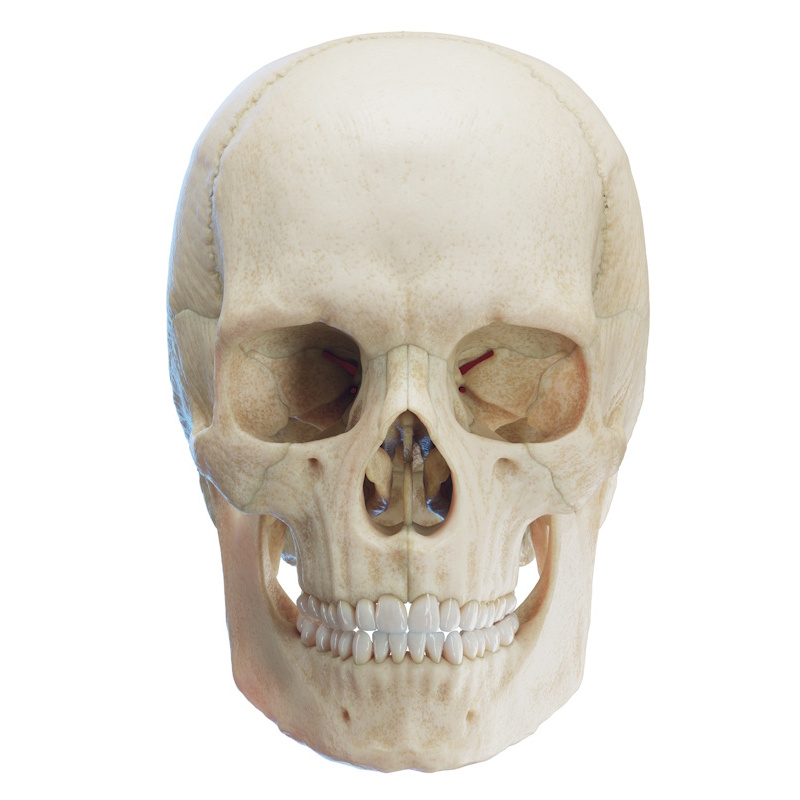
The nasal bone (os nasale) is a small, thin, paired bone of the viscerocranium that forms the nasal bridge and the upper roof of the anterior nasal cavity. Positioned side-by-side along the midline inferolateral to the glabella, the nasal bones are situated between the frontal processes of the maxilla. Each nasal bone articulates with four bones: the frontal bone (os frontale), the ethmoid bone (os ethmoidale), the maxilla, and the contralateral nasal bone. The nasal bones are typically rectangular in shape.
Borders (Margins)
- Superior border (margo superior): Thick and serrated; articulates with the nasal part of the frontal bone at the frontonasal suture (sutura frontonasalis), contributing to the bridge of the nose.
- Lateral border (margo lateralis): Articulates with the frontal process of the maxilla at the nasomaxillary suture.
- Inferior border (margo inferior): Thin, free border that articulates with the upper lateral nasal cartilage, overlapping its superior aspect by 3 to 4 mm.
- Medial border (margo medialis): Articulates with the corresponding border of the contralateral nasal bone at the internasal suture (sutura internasalis).
Surfaces
- External surface (facies externa): Smooth and transversely convex, it is covered by the procerus (m. procerus) and nasalis (m. nasalis) muscles. It typically features a small central opening - the nasal foramen (foramen nasale) - which transmits a small vein.
- Internal surface (facies interna): Transversely concave; faces the nasal cavity. It contains the ethmoidal groove (sulcus ethmoidalis), which transmits the anterior ethmoidal nerve (nervus ethmoidalis anterior).
Note: Nasal bone fractures represent the most common type of facial bone fracture. They typically result from physical assaults, interpersonal violence, sports-related trauma, falls, and motor vehicle accidents.